The short answer
A website is enough to inform fans. An app is what you need to know them, reach them and earn more from them. Most professional football clubs therefore run both: the website for reach and search, the app for logged-in, returning fans and first-party data.
The question is rarely “app or website?” but “what should each one do?”. This guide shows what a website does best, what only an app can do, and how to tell whether your club is ready for an app.
By Morten Marcussen
What a website does best
The website is your club’s front door to everyone who is not yet a fan. It is open to anyone, without a download or a login.
- Reach through search. People who google your club, a match or a ticket price land on the website, not in an app.
- News and match information. Fixtures, results, line-ups and club news are easy to publish and share.
- Sponsors and partners. Partner pages, press releases and B2B information belong on the open web.
- One-off visitors. Away fans, tourists and journalists will rarely download an app for a single visit.
- Ticket and shop entry points. The first purchase often starts with a search and a link.
What a website rarely does well: it does not know who the visitor is. Most visitors are anonymous, come once a week at most, and leave no data the club can use.
What only an app can do
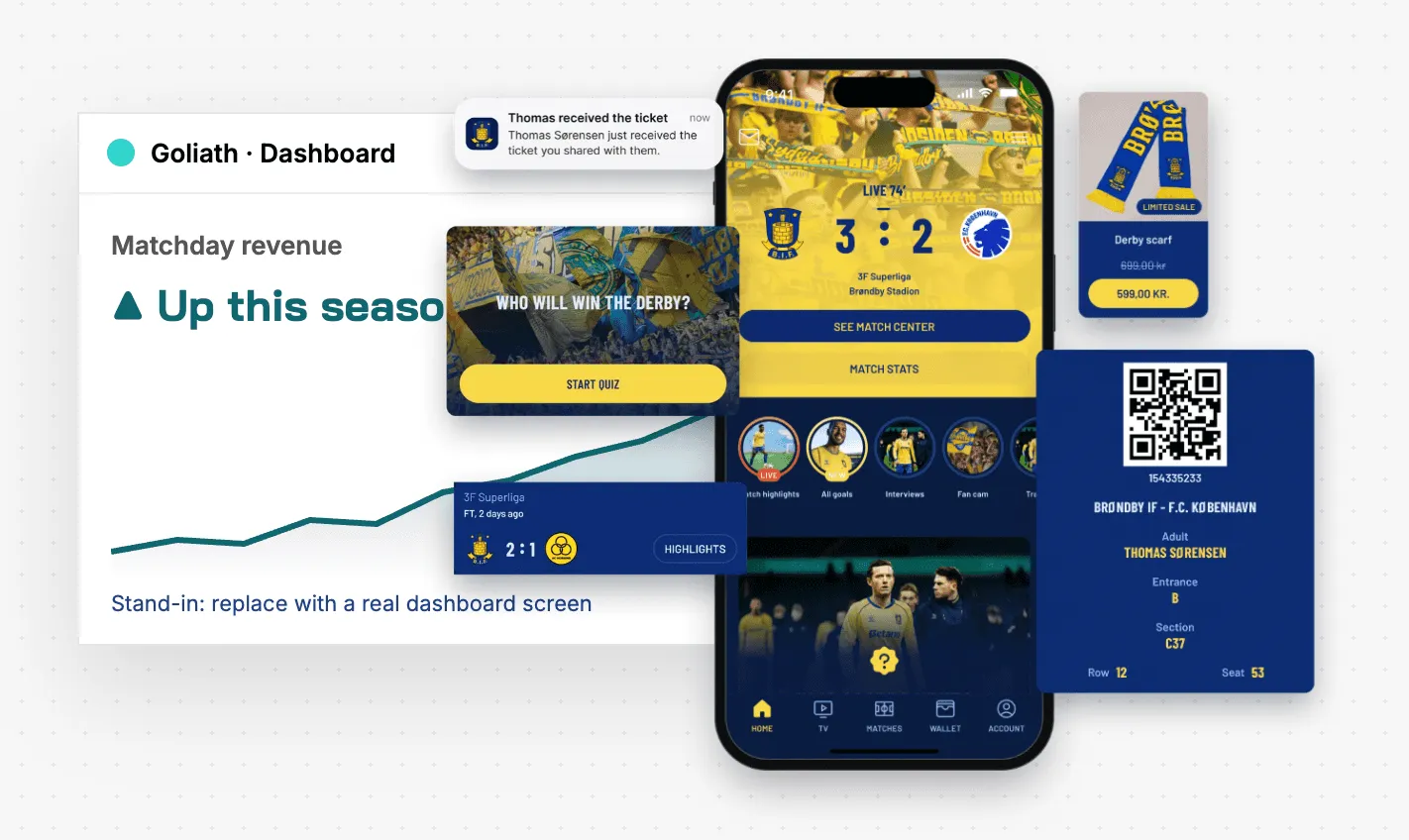
An app turns an anonymous visitor into a known, logged-in fan who comes back every day – not just on matchday.
- Push notifications. Goal alerts, line-ups, ticket releases and offers land on the fan’s lock screen. On a website, the fan has to come to you.
- Digital tickets and season cards. A wallet in the app makes the phone the ticket – and tells the club who actually shows up.
- Loyalty and rewards. Points for attending, quizzes, polls and vouchers need a logged-in fan who returns.
- Personalised offers. Segmented messages based on what each fan buys, watches and attends.
- First-party fan data. Every login, scan and purchase builds a profile the club owns – instead of renting audiences on social media.
- Matchday in the stadium. Live quizzes, in-seat F&B offers and ticket sharing between friends.
These features are what move revenue: ticket sales, attendance, shop and F&B. They all depend on a fan who is logged in, which is what an app does best.
Club app vs. website at a glance
| Website | Club app | |
|---|---|---|
| Best for | Reach, search, news, sponsors | Loyal fans, matchday, revenue |
| Who uses it | Everyone, mostly anonymous | Logged-in fans who return |
| How often | Around matches and big news | Daily, when the club sends a reason |
| Reaching fans | Fans must come to you | Push notifications to the lock screen |
| Tickets and season cards | Purchase | Purchase, wallet, sharing, scan data |
| Loyalty and rewards | Limited | Points, vouchers, quizzes, polls |
| Fan data | Anonymous traffic | First-party profile per fan |
| Found on Google | Yes | No – needs the website to be found |
Why most clubs need both
The website and the app are two steps in the same journey: the website finds the fan, the app keeps them.
- Discover. A fan searches for tickets or news and lands on the website.
- Convert. The website points to the app: “Get your ticket in the app”, “Collect points for showing up”.
- Engage. In the app, the fan logs in, gets push messages and uses the digital season card.
- Grow. The club learns what each fan does and sends the right offer at the right time.
The two should share content and data. News, video and match data are published once and shown in both places, so the club does not run two editorial teams.
When is a website enough?
A website alone can be the right choice for small clubs with few season-card holders and no digital ticketing. If two or more of these points fit your club, an app will likely pay off:
- You sell season cards or have a regular home crowd every matchday.
- You want to cut no-shows and fill empty seats.
- You have sponsors who want measurable, digital exposure.
- You want to know who your fans are – not just how many visited the website.
- Your fans already expect digital tickets and live notifications.
- You want to grow ticket, shop or F&B revenue per fan, not just the number of fans.
An app does not have to be a large IT project. A white-label club app is built on a proven platform and branded as the club’s own, so it can launch in weeks rather than months. See also our guide to the best fan engagement platforms for football clubs.
What the app changed at F.C. Copenhagen
F.C. Copenhagen runs both a website and a club app built on the Sports Innovation platform. After launch, the app became the club’s main daily channel to its fans:
| Result | F.C. Copenhagen |
|---|---|
| Season-card holders who are active app users | 90% |
| Fans with a profile who use the app monthly | 85% |
| Share of video watched in the app (vs. desktop) | 70% |
| No-show rate on season cards | From 40% to 15% |
| Open rate on segmented messages | 87% |
In Denmark, Akademisk Boldklub (AB) grew its app users by 50% around its biggest match of the season. Read the AB case or see how FCK rewards fans for showing up.
FAQ
The questions clubs ask about choosing between a club app and a website are answered on the FAQ page.